
Let’s take a moment to challenge a belief I often hear related to ADHD—the idea that ADHDers are lazy. If you’ve ever felt this way, I want to offer a different perspective: What if you learned a habit of opting out as a way to blame, “I didn’t try” rather than facing the potential hardship of trying and failing. What if you’re not lazy, but instead, your brain is wired to seek ease?
The Science of “Easy”
Neuroscience tells us that our brains are designed to conserve energy and avoid effortful tasks without a compelling reason to engage. This is especially true for people with ADHD, whose executive function challenges make prioritizing, organizing, and initiating tasks feel overwhelming. The prefrontal cortex—the part of the brain responsible for planning and decision-making—requires more effort to activate, making some tasks feel extra hard to start.
This isn’t laziness. It’s your brain naturally resisting what feels hard. Failed outcomes create hardships, especially when effort doesn’t create the results you or others expected.
The good news? You can work with your brain instead of against it by making tasks feel easier to start.
The Power of the “Easy First Step”
When a task feels daunting, distilling it down into the smallest, easiest first step reduces resistance. “What is the smallest step I can take that my brain can’t push back on? Do you get the push back, ‘It’s too hard, too big, too ______…” Making it so easy that it feels “silly” not to do it is the workaround. When I first heard this, I dismissed it as the dumbest suggestion yet. How was opening my laptop going to get me to write you this email? Then, I debunked my own judgment. And here I am.
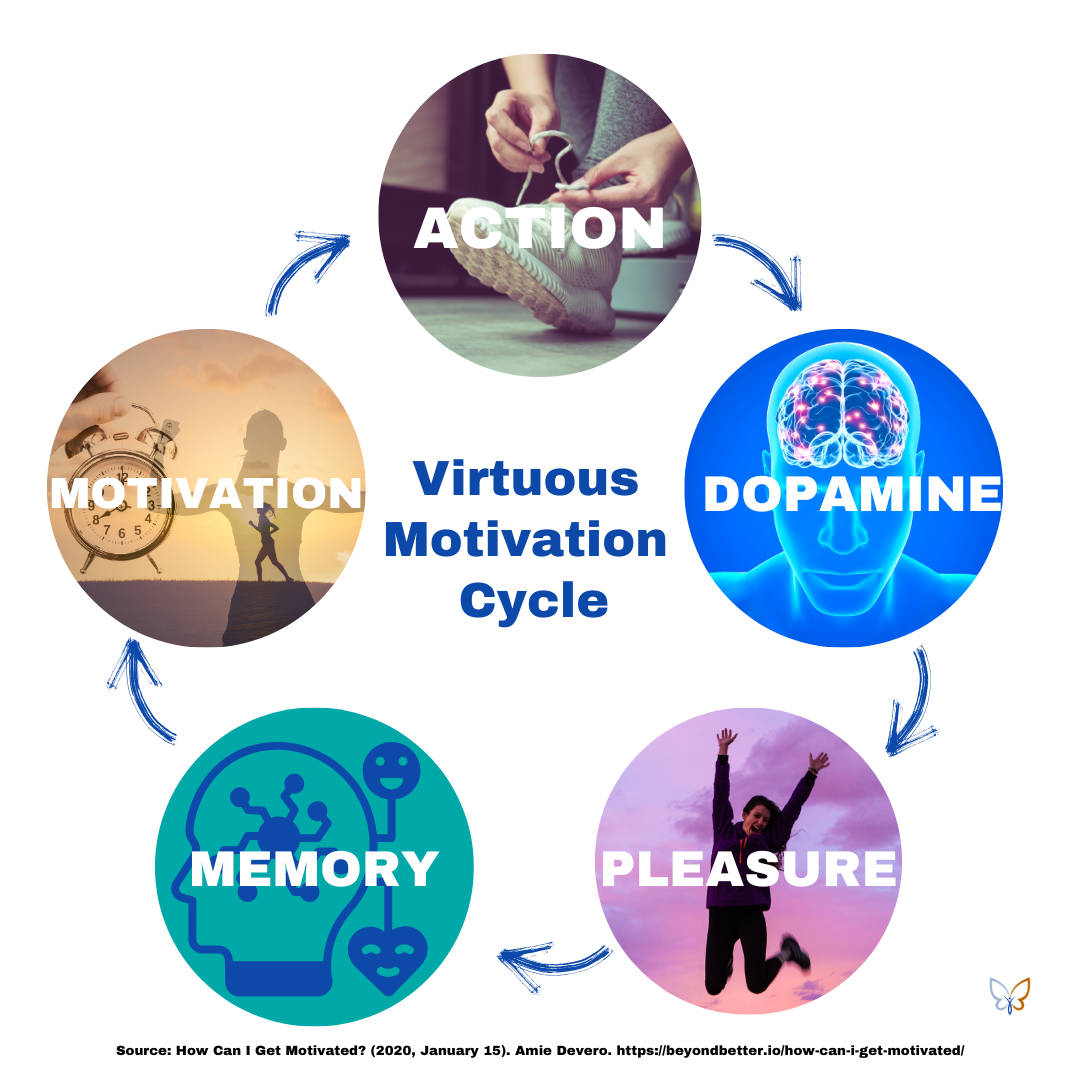
Taking action gives your brain a small dopamine boost, making it easier to continue. This is why getting started—even with something small—is the key to unlocking momentum.

For example, if organizing your priorities for the day feels overwhelming, rather than tackling everything at once, you could:
🖋️ Write down just one thing that matters today.
📃 Open a blank document and title it “Priorities.”
⏳ Set a 2-minute timer and brainstorm tasks without worrying about order.
Each small step builds confidence and shifts your brain out of avoidance mode.
Applying This to Prioritizing and Organizing
Instead of thinking I should get it together, try experimenting with ways to make prioritization easier:
- Use external tools (e.g., a whiteboard, your mirror with dry-erase markers, sticky notes, or a simple app) to offload mental effort.
- Start with one clear, easy choice instead of sorting everything at once. (This method is working on the all or nothing habit)
- Leverage body doubling—working alongside someone or saying your plan out loud to yourself to create accountability.
Your brain isn’t working against you—it’s looking for ways to make things easily manageable. When you design systems that make starting easy, momentum follows.
I’d love to hear what resonates with you. Let’s discuss how we can create an “easy button” for the things that feel overwhelming.

I look forward to exploring the next common thread that touches ADHD lives and sharing in more depth! You may have one you’d like to explore.
You do YOU! 💫