
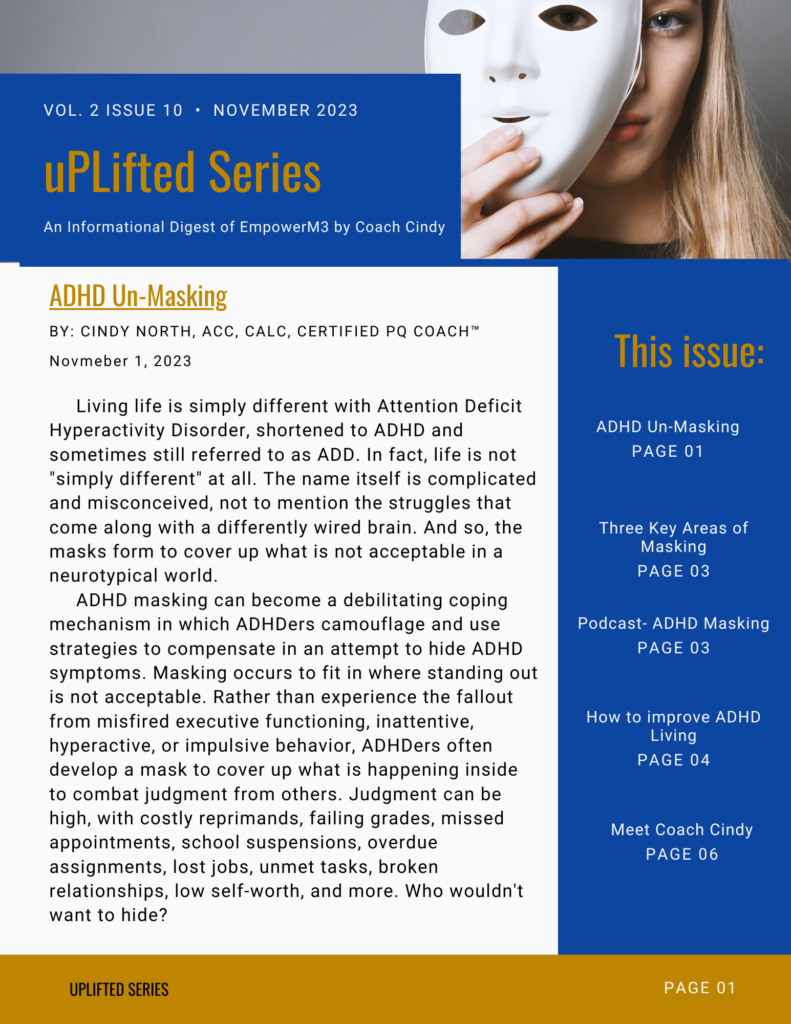
ADHD Un-Masking- An uPLifted Series- November 2023
Life is simply different with ADHD, and honestly, it is not “simply different” at all. So masks form to cover what a neurotypical world doesn’t accept. ADHD masking is a coping mechanism in which ADHDers camouflage and compensate to hide their symptoms, to avoid the fallout from misfired executive functioning: reprimands, failing grades, missed appointments, lost jobs, broken relationships, low self-worth. Who wouldn’t want to hide?
Three key areas of masking
- Social masking. Like wearing chameleon skin, constantly “acting” in a socially acceptable way and rarely getting to be yourself.
- Academic or work masking. An ADHD Swiss Army knife of survival tactics, because performance takes extra effort when attention, focus, time management, organization, and working memory are all harder.
- Emotional masking. Worn to hide reactions that feel unacceptable; ADHDers often suppress emotion to avoid conflict and the fallout of feeling things in a big way.
Living behind masks is exhausting. It can increase stress and anxiety, contribute to depression, and even delay accurate diagnosis and treatment.
Masking is not the same as coping
It’s much more interesting to embrace who you really are rather than waste time pretending to be someone you are not.— Adam Levine
“That” person you are hiding is who you are designed to be. An ADHD brain style carries strengths neurotypical minds don’t have ready access to. Masking is not all downside, developing it builds resilience and problem-solving, but the effort usually far exceeds the payoff over time. The key distinction: masking adapts behavior to conceal symptoms, while coping strategies intentionally work with your symptoms to help you live fully from strength. What is true for you is best decided by you.
How to improve ADHD living
- Explore medication options with an ADHD-informed prescriber.
- Increase movement and exercise to boost mood-supporting neurochemicals.
- Eat to fuel the brain, not to cope with emotions, and prioritize sleep so the brain can sort, repair, and recharge.
- Consider Cognitive Behavioral Therapy with an ADHD-experienced therapist, and partner with a Certified ADHD Life Coach who works with your wiring.
- Practice mindfulness daily, externalize thoughts through journaling, and reflect from the eye of a friend: is this mask serving me?
- Identify your strengths and use them often, and build your own owner’s manual for the way your brain is wired.
Improving daily living without masks is hard if your inner critic runs the show. Take notice when masking stops serving you, and be the person you are proud to be.
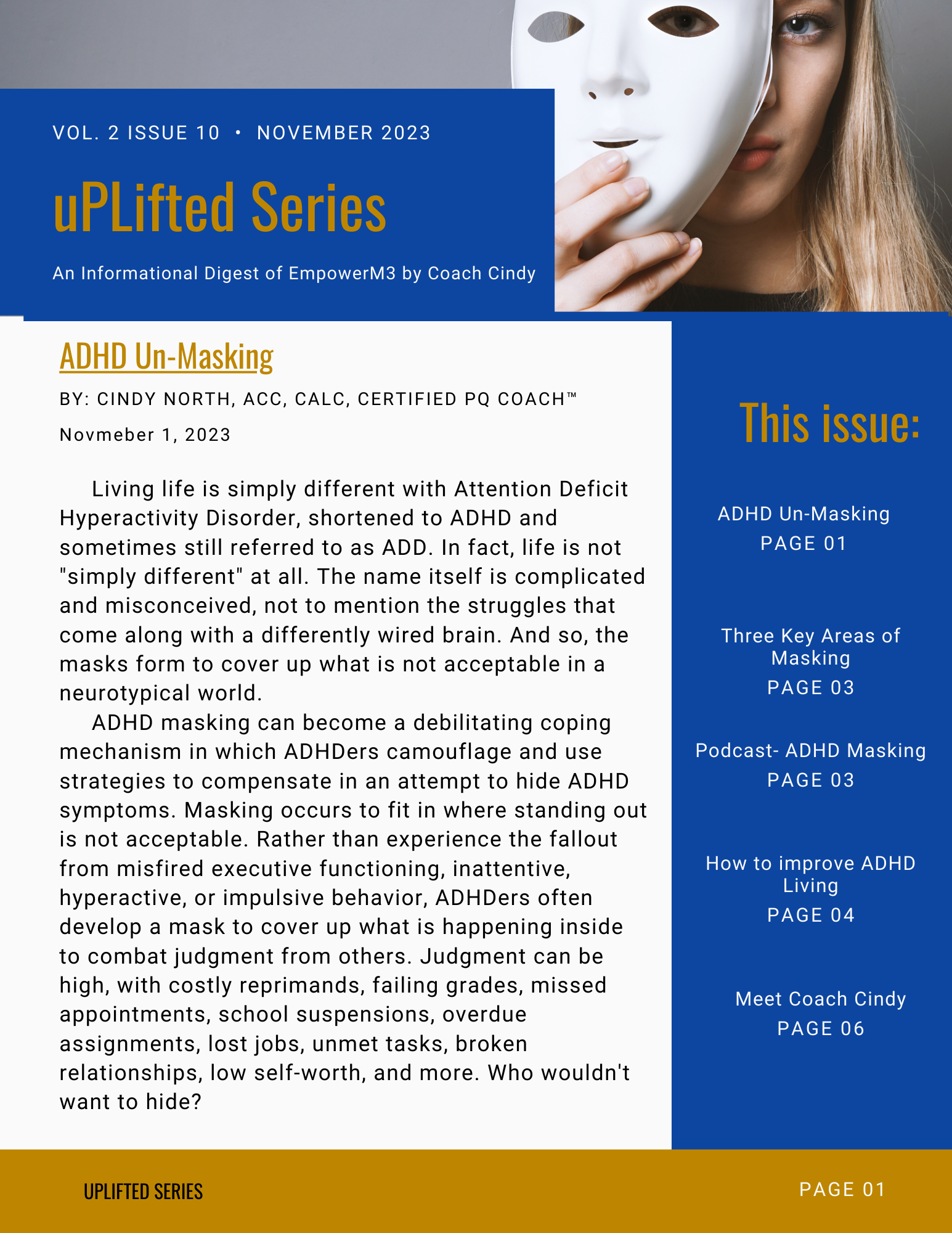
View this uPLifted issue in its original magazine-style layout.